
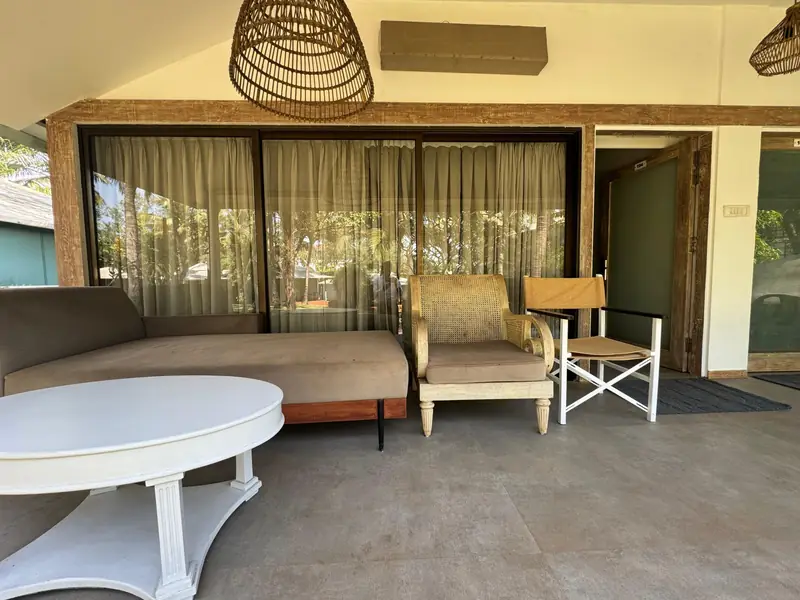
 Luxury Cottage
Morjim turtle beach: when Olive Ridleys nest, and how to visit without disturbing them
Morjim is known as turtle beach because Olive Ridley sea turtles nest there, mainly from late December to March. The Goa Forest Department protects the beach and moves eggs to a fenced hatchery, where they incubate for about 45–52 days. Visitors can walk the beach, but lights and noise disturb nesting.
By Anurag Kamboj · Updated
Luxury Cottage
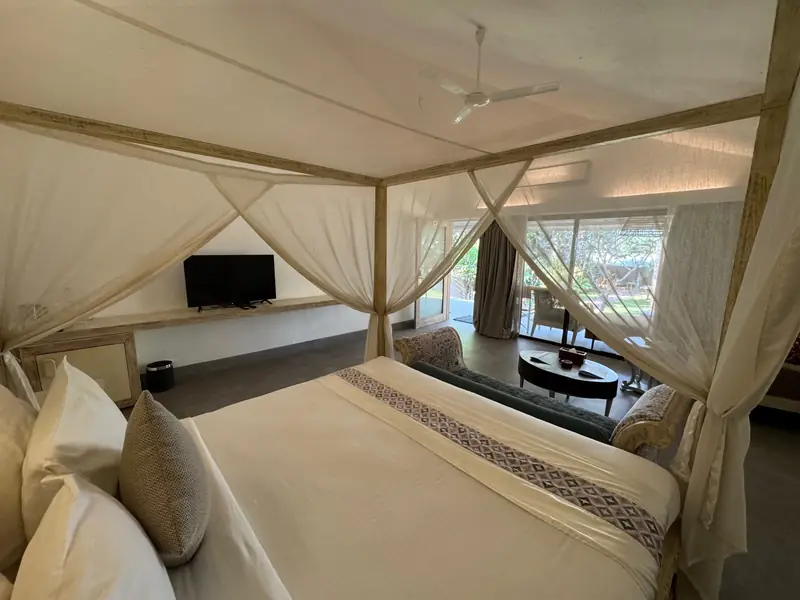 Villa Room
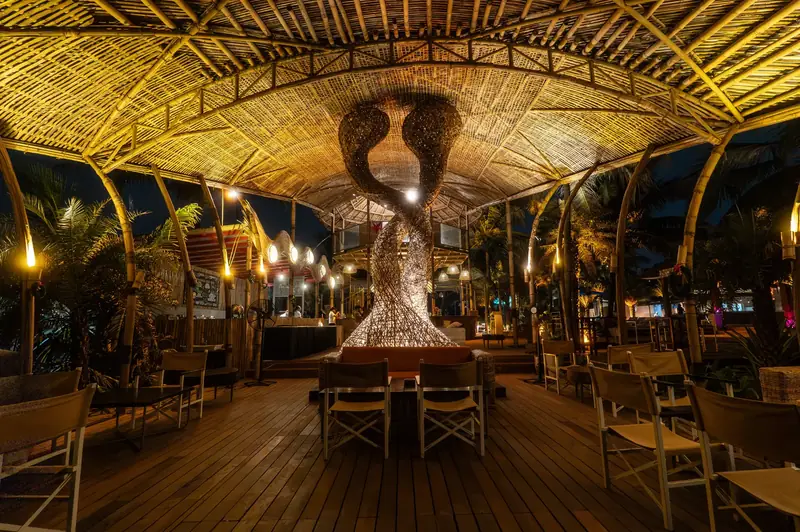 Restaurant
Mediterranean and Middle Eastern plates in a bamboo pavilion by the sea, 11 AM–11 PM.
Why is Morjim called turtle beach?
Morjim is called turtle beach because it is one of the Goa beaches where Olive Ridley sea turtles come ashore to lay their eggs. Olive Ridleys are among the smallest sea turtles, and they return to sandy beaches to nest. Morjim, a long and relatively quiet beach on the northern bank of the Chapora river estuary in North Goa, is managed by the Goa Forest Department as a protected nesting site. Goa Tourism (GTDC) lists Morjim as a nesting beach where volunteers guard nests and help hatchlings reach the sea; Galgibaga, in South Goa, is another. The protection has shaped Morjim's character as much as its wildlife. It is a large part of why the beach stayed calmer and less built-up than the beaches south of the river, and why a winter visit means sharing the sand with a working conservation effort. Morjim is still a public beach that anyone can walk; the rules further down are about how to walk it.
When do Olive Ridleys nest and hatch at Morjim?
Olive Ridleys nest at Morjim mainly from late December to March, with most nests laid January–March, and hatchlings follow about 45–52 days after each nest is laid.
| Stage | Roughly when | What happens |
|---|---|---|
| Nesting begins | Late December | First nests found on 25 December 2024 and 26 December 2025 (Daijiworld) |
| Most nests | January to March | The busiest period for nests |
| Eggs moved | Throughout the season | Forest Department staff move eggs to a fenced hatchery |
| Incubation | About 45–52 days per nest | Eggs develop in the hatchery |
| Season tails off | Mid to late March | The 2024–25 season ran from 24 December to 11 March (The Goan) |
| Last hatchlings | Into about April | Late nests hatch after nesting ends |
The incubation window allows some simple arithmetic. A nest laid around 10 January would be due roughly between 24 February and 3 March, and one laid on 5 March roughly between 19 and 26 April. These are natural cycles, not schedules, and nobody can promise a hatching on your dates.
Can visitors see the turtles at Morjim?
Sometimes, but a turtle sighting at Morjim is luck, not an attraction you can book. Eggs are moved to the fenced hatchery, and forest staff decide what happens around it, so watching quietly from a distance, when staff allow it, is the most anyone should expect. You can improve your chances without harming the turtles. Visit between January and March, when most nests are laid, walk the beach quietly in the early morning, and ask forest staff politely what, if anything, visitors can see that season. Treat anyone offering a guaranteed turtle encounter with suspicion. Never follow a turtle, touch a hatchling or crowd the hatchery fence for a photograph, and switch off your phone's flash. A calm visit that sees nothing still counts as a good one, because the point of the site is that the turtles are left alone.
How many turtles nest at Morjim each year?
Numbers at Morjim swing sharply from one season to the next. According to The Goan, 152 turtles laid more than 15,500 eggs at Morjim between 24 December 2024 and 11 March 2025, and Forest Department staff released the hatchlings into the sea. Forest Department figures reported by The Goan in May 2026 show nests on the Morjim–Mandrem stretch rising from just 8 in 2014–15 to 276 in 2024–25. The next season was much weaker. O Heraldo reported in July 2026 that nesting in North Goa fell by more than half in 2025–26, to 83 turtles and 8,991 eggs, against 175 turtles and 18,243 eggs the season before. The Goan counted 36 nests at Morjim and 17 at Mandrem between January and March 2026. Both papers name artificial lights and music on the beach as threats. For visitors the point is simple: a strong season is never guaranteed, and a dark, quiet beach at night helps.
What are the rules on the sand during nesting season?
Keep your distance, keep the beach dark and do what forest staff ask, because lights and music are the threats named in Forest Department data.
- Distance: stay well back from the fenced hatchery and from any turtle on the sand.
- Light: no torches, phone flashlights or flash photography on the beach at night.
- Noise: keep voices and music down after dark.
- Hands off: don't touch or pick up hatchlings, or carry them to the water.
- Dogs: keep them leashed and away from fenced nesting areas.
- Litter: take everything back with you; plastic on the sand is a hazard.
- Staff: follow Forest Department instructions at all times.
Is Morjim a wildlife sanctuary?
Not in the sense most people mean. Morjim is a protected turtle nesting site managed by the Goa Forest Department, on a public beach you can walk freely; the fenced area is the hatchery, not the whole shore. The formal bird sanctuary most visitors know in North Goa is the Salim Ali Bird Sanctuary on Chorão Island, near Panaji, reached by a short ferry from Ribandar. Morjim still rewards birdwatchers. The Chapora estuary and its sandbanks attract waterbirds, especially in winter, and early mornings at the southern end of the beach, looking across the water to Chapora Fort, are the best time to watch. Bring binoculars, keep well back from any flocks resting on the sand, and give the turtle hatchery the same distance you'd give the birds.
Staying beside the nesting beach
Staying on Morjim means your turtle-season walks start at the sand rather than in a taxi. Marbela Beach Resort sits directly on Morjim Beach, with access from the resort to the sand, and has been part of this coast for over 17 years. Rooms are set among gardens a short walk from the sea: Luxury Cottages with private verandahs, Villa Rooms with balconies or verandahs, Premium Cottages, and Spa Villa Rooms with private outdoor spa areas. By day, the beach club has sunbeds, cabanas and a pool, and Meso serves Mediterranean and Middle Eastern food with sea views until 11 PM. The beach club closes at 10 PM, so keep any late walk on the sand after that dark and quiet. The resort is pet-friendly; dogs should stay leashed and away from nesting areas. For the wider area, read our Morjim Beach travel guide.
Planning a turtle-season trip
Plan a turtle-season trip for January to March, when most nests are laid, and book early, because nesting overlaps with Goa's peak tourist season.
- Choose your dates. January to March gives the best odds; November is before the season, and the first nests of the last two seasons came only on 25 and 26 December. Our guide to the best month to visit Goa weighs weather and crowds.
- Book ahead. Rates change daily on the Marbela booking engine, and bookings are non-refundable.
- Arrange transport. Morjim is about 28 km (40–60 minutes) from Mopa and about 55 km (1 hour 15 minutes to 1 hour 45 minutes) from Dabolim, and there's no resort shuttle.
- Pack for dawn: binoculars and a light layer, and leave the torch switched off.
- Swim safely. Nesting doesn't close the sea, but the flags still apply; read is Morjim Beach good for swimming?
- Ask questions of reservations on +91 91588 81185 or +91 91588 81183, or at info@marbelabeach.com.
Sources
- Morjim Beach, Goa Tourism Development Corporation (GTDC)
- First Olive Ridley nest of the season at Morjim, Daijiworld
- 130 Olive Ridley hatchlings released at Morjim beach, The Goan
- Turtle nesting boom on Goa beaches despite tourism rush, The Goan
- Olive Ridley nesting drops by over 50% in North Goa, O Heraldo
FAQs
Can tourists watch turtles hatch at Morjim?
Sometimes, from a distance and only when forest staff allow it. Hatchings can't be predicted to the day, so no visit or tour can guarantee one.
What should I do if I see a turtle on Morjim Beach?
Stop, keep well back, switch off any light and stay quiet. Tell forest staff if they are nearby, and don't touch the turtle or its eggs.
Do turtles nest at Morjim during the monsoon?
No. Nesting runs mainly from late December to March. During the monsoon, roughly June to September, red flags close the sea to swimmers.
Can I bring my dog to Morjim during nesting season?
Yes, but keep it leashed and away from fenced nesting areas, clean up after it and avoid the midday heat on the sand.
Why do lights harm nesting turtles?
Bright lights and loud noise on the beach disturb nesting turtles, which is why visitors are asked to keep the beach dark and quiet at night and follow forest staff instructions.
About the author
Anurag Kamboj is a Goa explorer and travel writer who puts together Marbela Beach Resort's guides to Morjim and North Goa, from airport routes and beach-safety rules to turtle season and where to sit for sunset.
How these guides are researched →