
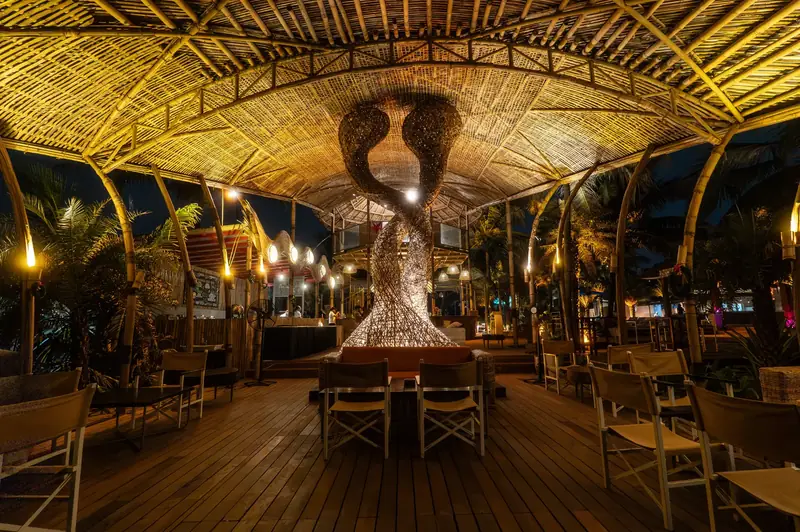
 Restaurant
Mediterranean and Middle Eastern plates in a bamboo pavilion by the sea, 11 AM–11 PM.
An organic, locally sourced restaurant in Goa should be able to tell you where its vegetables, milk and fish come from, and its menu should change with the seasons. On Morjim, Meso at Marbela Beach Resort says it uses locally sourced organic produce and supports local farmers, though it publishes no farm names or certification.
By Anurag Kamboj · Updated
Restaurant
Mediterranean and Middle Eastern plates in a bamboo pavilion by the sea, 11 AM–11 PM.
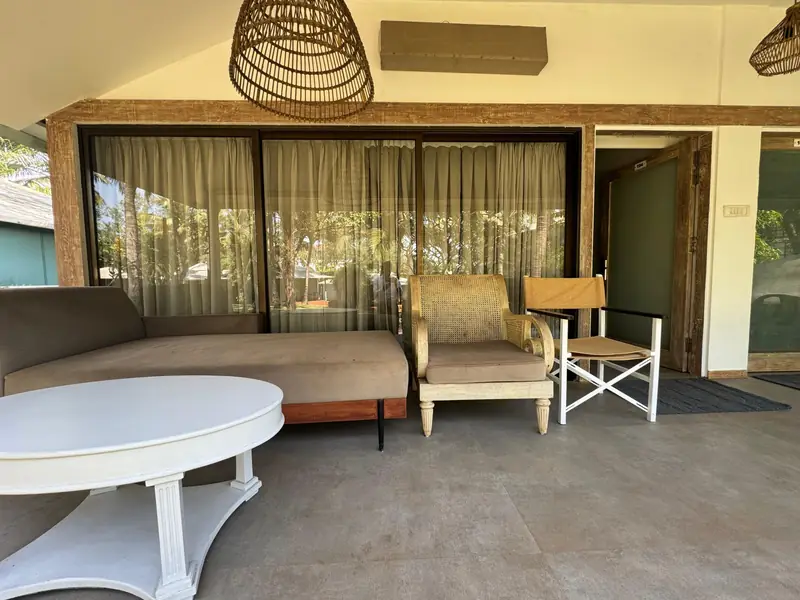 Luxury Cottage
Ask specific questions, and listen for specific answers. A restaurant that genuinely sources locally in Goa can name the kind of supplier, whether that is a nearby farm, a village dairy or the fish market, and will not be thrown by the question. Vague replies such as "we use the best ingredients" tell you nothing. Look at the menu too. If a kitchen offers the same twenty fish and the same vegetables in May as in December, much of it is coming from cold storage. Seasonal specials, dishes that disappear and a short fish list are good signs. Organic is a narrower claim than local. Certified organic produce carries a certification, while many small Goan farmers grow without chemicals but are not certified. Both can be worth supporting, but a restaurant should be clear about which it means. This page uses those tests, and applies them to Marbela's own restaurant as well.
Goa's harvest and fishing calendar is the easiest way to judge whether a menu is local, and the broad pattern is well established.
| Season | Local produce and catch | What a local menu should show |
|---|---|---|
| November–February | Boats out, full fish markets, winter vegetables | A wide fish list, salads and greens |
| March–May | Cashew apples, mangoes, kokum | Mango and kokum drinks, urrak, grilled fish |
| 1 June–31 July | Mechanised fishing ban; only small canoes fish; monsoon greens | A short fish list, more vegetables and chicken |
| August–October | Kingfish, mackerel, prawns, snapper and crabs return, at high prices | Seafood coming back, with honest pricing |
Goa's monsoon fishing ban runs from 1 June to 31 July, both days included, and it is the clearest test of whether a coastal menu is honest. According to The Goan's report on the 2025 notification by the Director of Fisheries, the 61-day ban under the Goa Marine Fishing Regulation Act, 1980 covers mechanised vessels, trawl nets and purse-seine nets. Registered canoes with motors of up to 10 HP, using gill nets only, may keep fishing. So a little fresh local fish can reach kitchens in those weeks, but not the full range, and a restaurant listing every species in July is probably using frozen stock. Supply does not bounce back cheaply either. The Goan reported in August 2024 that kingfish, mackerel, prawns, red snapper and crabs returned to Panjim market at high prices, held up by the monsoon. Diners can help: pick plentiful fish such as mackerel, skip juvenile fish, and ask whether the prawns are wild or farmed.
Eating responsibly on Morjim includes what happens on the sand after dinner. Morjim is a protected Olive Ridley nesting beach, and the Forest Department moves eggs to a fenced hatchery, where they incubate for about 45–52 days. Nesting runs mainly from late December to March. The Goan, citing Forest Department data in May 2026, reported that nests on the Morjim–Mandrem stretch rose from 8 in 2014–15 to 276 in 2024–25, and it named lights and music among the threats. The gains are fragile. O Heraldo reported in July 2026 that North Goa nesting fell by more than half in 2025–26. For diners, the rules are simple: keep torches and phone lights off the beach at night, stay clear of fenced nests and follow forest staff. Our Morjim turtle beach guide explains the hatchery.
Meso, the restaurant at Marbela Beach Resort, sets out its approach on its restaurant page: health-conscious dining, locally sourced organic produce, and "supporting local farmers" and "eco-friendly materials in our design and kitchen practices". The building is part of that: a handcrafted bamboo restaurant facing the Arabian Sea. On the menu it shows in details such as organic brown rice with the Grilled Calamari & Prawns, listed at ₹850, and the café's coffee made with fresh, locally sourced milk. The Meso Bar makes fresh juices and smoothies, and cocktails use seasonal fruit.
Marbela does not publish named farms or an organic certification, so ask which items are organic and where they come from. Price and service are part of the picture too. As of September 2026, Zomato lists "Marbela Bar & Restaurant" at 3.9 from 365 dining reviews, at about ₹2,200 for two without alcohol, and Swiggy Dineout shows 4.2 from 4,152 ratings, at ₹1,800 for two. Reviews praise the setting and the wood-fired pizzas; some mention slow service and high prices. The Meso restaurant page has the current menu.
Most of these habits cost nothing and add up over a week-long trip. They mostly shift where you spend and what you order.
For a healthy meal by the sea, Meso is open daily 11 AM–11 PM; book through Meso's online table booking or on +91 91588 81184. For a lighter, grill-led menu, read our guide to the Mediterranean restaurant in North Goa, and for Goan staples see Goan dishes to try.
Increasingly, yes. Many small farmers grow without chemicals, though fewer are certified, so ask restaurants whether "organic" means certified.
Marbela's restaurant page says Meso uses locally sourced organic produce, supports local farmers and uses eco-friendly materials. No eco certification is published, so ask the resort about specific practices.
At Meso, salads, grilled seafood and organic brown rice; at the Meso Bar, smoothies, protein shakes and fresh juices.
During the monsoon fishing ban, 1 June to 31 July, when only small canoes fish and more stock is frozen.
Keep torches and phone lights off the beach at night, stay away from fenced nests, avoid loud music on the sand and follow forest staff instructions.
About the author
Anurag Kamboj is a Goa explorer and travel writer who puts together Marbela Beach Resort's guides to Morjim and North Goa, from airport routes and beach-safety rules to turtle season and where to sit for sunset.
How these guides are researched →