
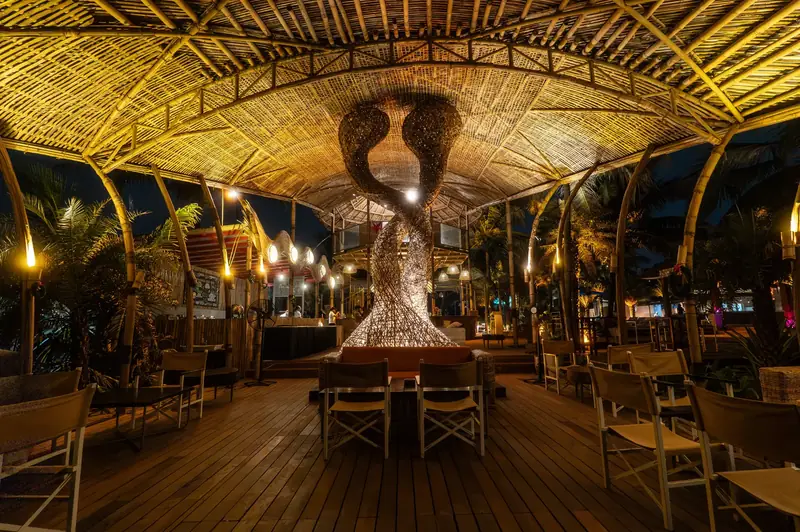
 Restaurant
Mediterranean and Middle Eastern plates in a bamboo pavilion by the sea, 11 AM–11 PM.
The best seafood restaurants in North Goa are the ones cooking that day's catch, and you can check that yourself: clear eyes, red gills, firm flesh and a clean sea smell. Seasons matter too. From 1 June to 31 July, the monsoon ban on mechanised fishing means less fresh fish and more frozen stock on menus.
By Anurag Kamboj · Updated
Restaurant
Mediterranean and Middle Eastern plates in a bamboo pavilion by the sea, 11 AM–11 PM.
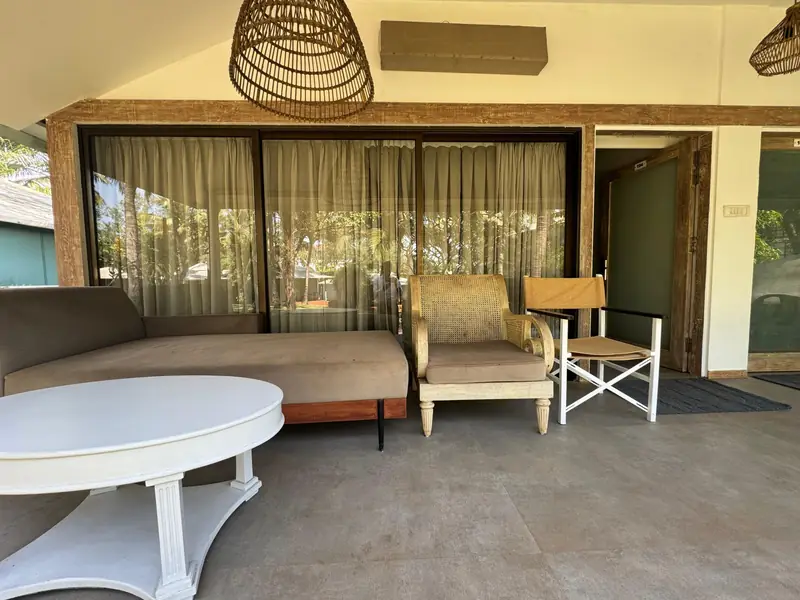 Luxury Cottage
Fresh seafood in Goa passes a few quick checks, and a good restaurant will happily show you the fish before it is cooked. Whole fish should have clear, bulging eyes rather than cloudy, sunken ones. Lift the gill flap if you are allowed: the gills should be bright red, not brown. The flesh should spring back when pressed, and the smell should be of the sea, never sharply fishy or of ammonia. Prawns should be firm with shells that cling, and heads that are not blackening. Squid and calamari should look glossy and white with intact skin, and crabs should feel heavy for their size. Mussels and clams should close when tapped. Anything already cleaned, portioned and waiting under a sheet of ice at 9 PM is harder to judge, so order it grilled simply rather than drowned in masala. That way you can taste whether it was worth the price.
The catch changes with the season, so the best seafood month in North Goa is roughly October to May. According to The Goan's report on the Director of Fisheries' notification, the monsoon ban runs from 1 June to 31 July, both days included. It covers mechanised boats, trawl nets and purse-seine nets, while small registered canoes using gill nets may still fish. Many shacks close in the same period.
| Season | What you will find | What to order |
|---|---|---|
| October–February | Boats back out, markets busy, shacks open | Kingfish, pomfret, prawns, squid, crab |
| March–May | Good supply, hotter days | Grilled fish, calamari, mackerel recheado |
| June–July | Mechanised fishing ban; more frozen stock | Ask what is fresh; consider vegetarian or chicken |
| August–September | Fishing resumes; The Goan reported kingfish, mackerel, prawns, snapper and crabs back in Panjim market in August 2024, at high prices | Prawns and fish, but check the price first |
A shack is better for cheap, simple fried fish in season, and a restaurant is better for grilled dishes, consistency and eating in the monsoon. The table below sets out the trade-offs.
| Beach shack | Restaurant | |
|---|---|---|
| Season | Roughly October to May | Usually year-round |
| Style | Rava-fried fish, Goan curries, tandoori | Grills, platters, sauces |
| Pricing | Often "market price" by weight | Usually fixed menu prices |
| Verdict | Choose it for a casual lunch on the sand | Choose it for a planned dinner or a monsoon visit |
Many North Goa shacks list big fish, lobster and tiger prawns at "market price", charged by weight. That is normal. The trouble starts when the weight is only revealed on the bill. Before anything goes on the grill, ask to see the fish, ask what it weighs and ask for the total price for that piece. Agree on whether the weight is taken whole or after cleaning. A shack that will not tell you the price first is one to leave. None of this applies to a menu with fixed prices, which is one reason some travellers stick to restaurants for lobster and large fish.
The seafood restaurants in North Goa worth a detour share a few habits: a short list of fish rather than twenty species, a charcoal grill in use, prices on the menu, and staff who can tell you what came in today. Location matters less than those basics. Towns like Mapusa, whose market is busiest on Fridays, supply much of the region's fish, and the local canteens nearby serve fish curry rice at lunch. On the coast, Morjim, Ashwem and Mandrem have shacks in season and a few permanent kitchens. Meso, the restaurant at Marbela Beach Resort on Morjim Beach, is one option for grilled, Mediterranean-style seafood by the sea rather than Goan curries. Its listed dishes include a charcoal-grilled Moroccan Fish Kebab at ₹720, Stuffed Baby Calamari with prawns at ₹650, Grilled Calamari & Prawns with organic brown rice and garlic beurre blanc at ₹850, and an Italian Seafood Platter at ₹1,600. Prices are from Marbela's website and may change. Freshly baked pizzas cover non-seafood eaters.
Order the way Goans do: ask what came in, keep the cooking simple, and match the fish to the season.
Our guide to Goan dishes to try explains recheado, ambot tik and the rest.
Before booking Meso, know what diners report. As of September 2026, Zomato lists "Marbela Bar & Restaurant" at 3.9 from 365 dining reviews, at about ₹2,200 for two without alcohol, and Swiggy Dineout shows 4.2 from 4,152 ratings, at ₹1,800 for two. Reviews praise the beachfront setting and wood-fired pizzas; some criticise slow service and prices. Book Meso through Meso's online table booking or on +91 91588 81184; it is open daily from 11 AM to 11 PM. The menu is on the Meso restaurant page. For other places to eat nearby, see Morjim restaurants and cafés.
Yes, at a reputable restaurant, but choose carefully. During the 1 June–31 July fishing ban more stock is frozen, so ask what is fresh and pick a busy kitchen.
Kingfish (surmai), pomfret and mackerel are the classics. Kingfish is a firm steak fish, pomfret is delicate, and mackerel is cheap and full-flavoured.
It is sold by weight at market price. Ask for the weight and total before cooking so the bill holds no surprises.
Meso at Marbela Beach Resort lists an Italian Seafood Platter of prawns, calamari, fish and grilled vegetables at ₹1,600.
Almost always. Shacks carry Indian vegetarian dishes, and Meso has salads and freshly baked pizzas.
About the author
Anurag Kamboj is a Goa explorer and travel writer who puts together Marbela Beach Resort's guides to Morjim and North Goa, from airport routes and beach-safety rules to turtle season and where to sit for sunset.
How these guides are researched →