
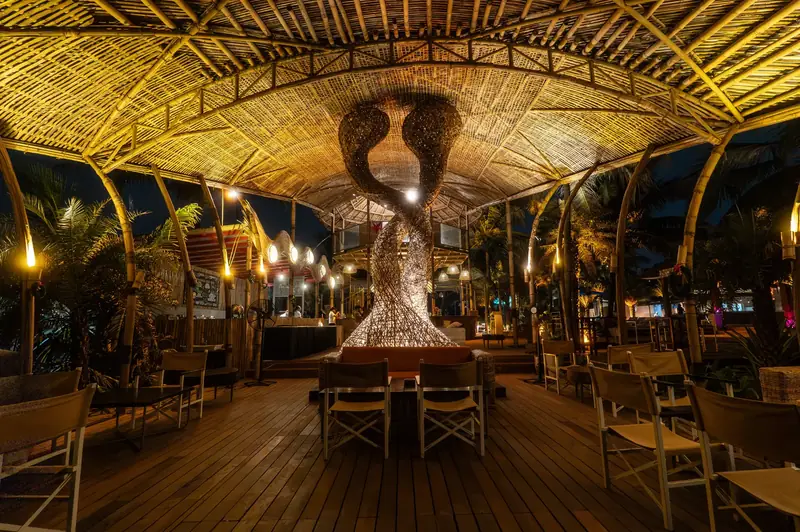
 Restaurant
Mediterranean and Middle Eastern plates in a bamboo pavilion by the sea, 11 AM–11 PM.
The Goan cuisine must-try dishes are fish curry rice, prawn balchão, recheado mackerel, chicken xacuti, pork vindaloo, sorpotel with sannas, and bebinca for dessert. Goan food blends Konkan coastal cooking, built on coconut and kokum, with Portuguese habits such as vinegar, pork and baked bread.
By Anurag Kamboj · Updated
Restaurant
Mediterranean and Middle Eastern plates in a bamboo pavilion by the sea, 11 AM–11 PM.
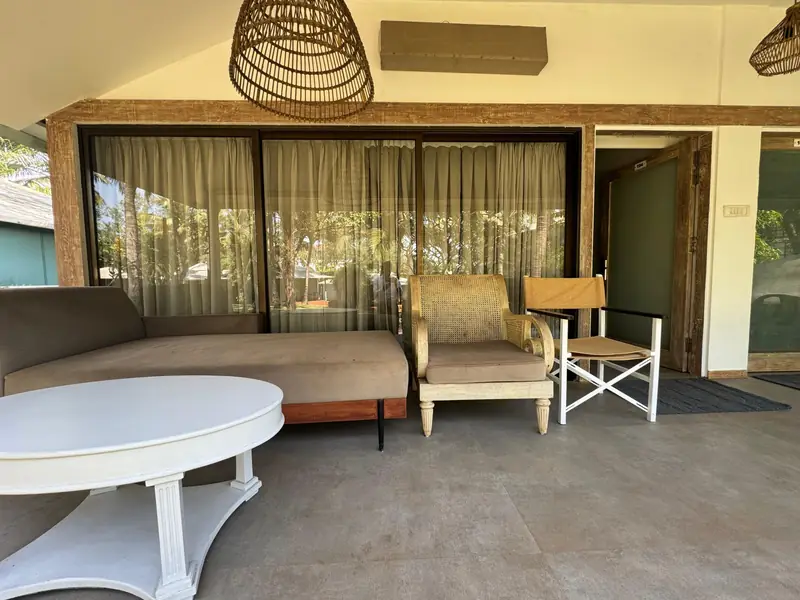 Luxury Cottage
Goan food tastes different because two traditions share the same coast. Hindu Goan cooking comes from the Konkan: coconut in almost everything, sourness from kokum or tamarind, plenty of fish and vegetables, and generally no beef or pork. Catholic Goan cooking absorbed around 450 years of Portuguese rule. It uses vinegar, traditionally made from coconut toddy, for its tang, and adds pork, sausages, baked bread and egg-rich sweets. The Portuguese also brought chillies, potatoes and cashew, all now central to the state's food. The result is a cuisine where sour and spicy matter as much as heat. Vinegar gives vindaloo its bite; kokum gives fish curry its pink colour and soft sourness. On a menu, dishes from both traditions sit side by side, and the best plan is to order one of each. Visitors who assume everything is fiery are usually surprised: many Goan dishes are tangy first and hot second.
These are the dishes that define Goan cooking, with a rough heat guide so you can order with confidence. Kitchens vary, so ask.
| Dish | What it is | Heat | Eat it with |
|---|---|---|---|
| Fish curry rice | Fish in coconut gravy soured with kokum; the everyday lunch | Medium | Rice, fried fish, pickle |
| Ambot tik | A sour (ambot) and spicy (tik) fish curry | Hot | Rice |
| Recheado | Mackerel or pomfret stuffed with red chilli-vinegar masala, fried | Medium-hot | Rice and curry |
| Prawn balchão | Prawns in a pickle-like vinegar masala | Hot | Rice or pão |
| Xacuti | Chicken or mutton in roasted coconut, poppy seed and spice gravy | Medium | Poi or rice |
| Vindaloo | Pork in vinegar, garlic and Kashmiri chilli; from Portuguese carne de vinha d'alhos | Tangy, medium-hot | Rice or pão |
| Cafreal | Chicken in a green coriander, chilli and garlic paste, pan-fried | Medium | Chips or pão |
| Sorpotel | Pork, traditionally with offal, in spiced vinegar gravy | Medium | Sannas |
| Crab xec xec | Crab in thick roasted coconut gravy | Medium | Rice |
According to Incredible India, the Ministry of Tourism's site, xacuti is a gravy built on roasted coconut and 16 to 18 spices, and vindaloo takes its name from the Portuguese words for wine and garlic. The site lists cafreal, ambot-tik and feni among the state's signatures too.
A Goan fish thali is a set lunch on one plate, and you order it simply by asking for a fish thali and naming the fish. Most local canteens in towns such as Mapusa and Panaji serve it at lunchtime only. Expect rice, a bowl of fish curry, a piece of fried fish (often rava-fried, coated in semolina), a vegetable side, pickle, and often a small glass of sol kadi, the pink drink of kokum and coconut milk that cools the palate. The fried fish is where the price changes: mackerel is the cheapest, kingfish and pomfret cost more. Ask which fish is fresh that day. Refills of rice and curry are common at canteens, but check before you assume. Eat with your right hand if you like; nobody will mind a fork either. A thali is the best-value meal in Goa and the fastest way to taste real everyday cooking rather than a tourist menu. Arrive around 1 PM, because popular canteens sell out.
Goa's bakeries and home kitchens produce as much character as its curries.
Timing changes what is on the table. In December, Catholic homes make kuswar, the Christmas platter of sweets that includes bebinca and dodol. From March to May, the cashew harvest brings urrak, the lighter first distillation of cashew feni, drunk fresh with lime and soda, while mangoes fill the markets. From 1 June to 31 July, the monsoon ban on mechanised fishing makes fresh seafood scarcer, so it is a good season to try vegetarian dishes and chicken xacuti instead. Fish returns in August, but not cheaply: The Goan reported in 2024 that kingfish, mackerel, prawns and crabs came back to Panjim market at high prices. Our guide to seafood restaurants in North Goa explains how to judge freshness.
Local canteens and village cafés are where Goan food is at its most honest, and North Goa's shacks serve the classics in season. On a Wednesday in the tourist season, from about late October, the Anjuna flea market is a good place to graze. Staying on Morjim? Meso, the restaurant at Marbela Beach Resort, is Mediterranean and Middle Eastern rather than Goan, which makes it a useful change after a few days of rich curries. Book through Meso's online table booking, and see our guide to Morjim restaurants and cafés for places nearby.
Goa has no official dish, but fish curry rice is widely treated as its signature everyday meal.
Some dishes are, such as ambot tik and prawn balchão. Many others, such as xacuti and fish curry, are more tangy and coconut-rich than fiery.
Khatkhatem, bhaji-pão, vegetable xacuti and dal are good options. Hindu Goan cooking has a strong vegetarian side.
Yes, from licensed sellers, but it is strong. Sip it with soda or lime rather than drinking shots, and never drink before driving or swimming.
No. Meso's menu is coastal Mediterranean and Middle Eastern with Asian and European influences.
About the author
Anurag Kamboj is a Goa explorer and travel writer who puts together Marbela Beach Resort's guides to Morjim and North Goa, from airport routes and beach-safety rules to turtle season and where to sit for sunset.
How these guides are researched →