

 Beach Club
Sunbeds, private cabanas, pool and house music, 11 AM–10 PM daily.
This Morjim Beach travel guide covers one of North Goa's calmest beaches: a long stretch of sand on the northern bank of the Chapora river, facing Chapora Fort, 50–60 minutes from Mopa airport. Come for shallow water, sunsets over the Arabian Sea and, from November to March, a protected Olive Ridley turtle nesting site.
By Anurag Kamboj · Updated
Beach Club
Sunbeds, private cabanas, pool and house music, 11 AM–10 PM daily.
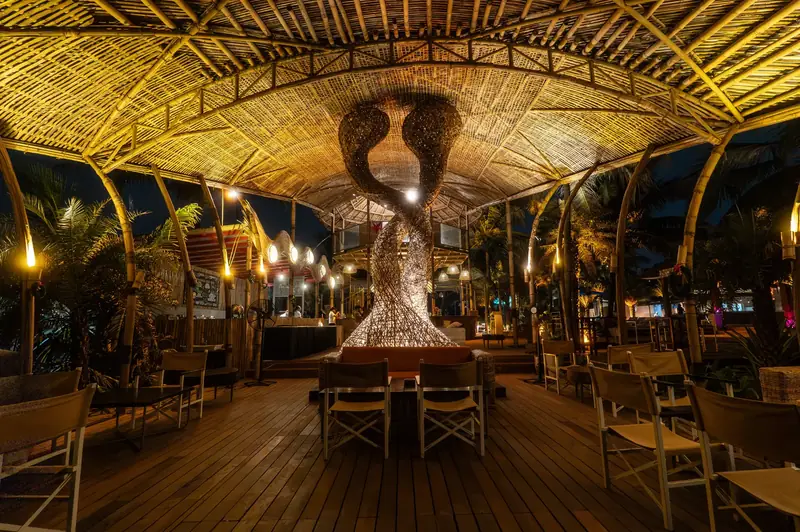 Restaurant
Mediterranean and Middle Eastern plates in a bamboo pavilion by the sea, 11 AM–11 PM.
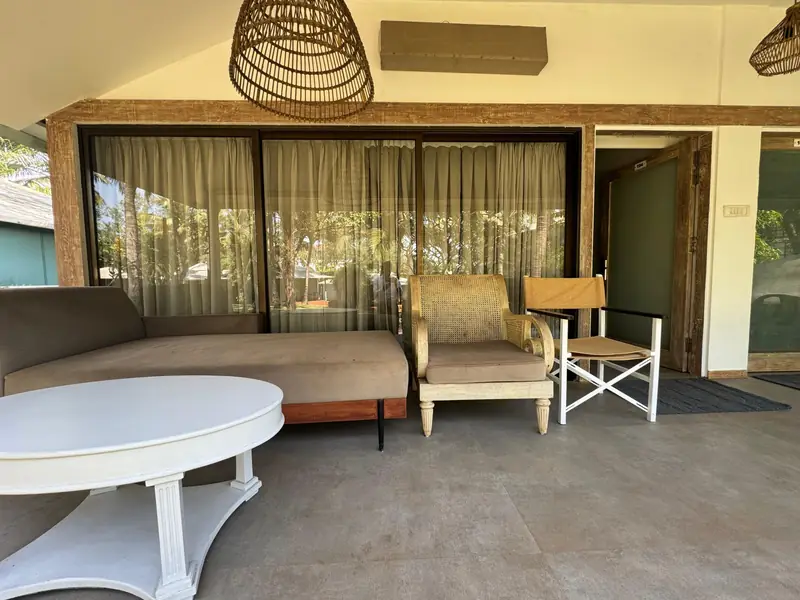 Luxury Cottage
Morjim is a beach village in Pernem taluka, and the basics below answer most planning questions.
| Location | Northern bank of the Chapora river estuary, opposite Vagator and Chapora Fort |
|---|---|
| Nearest airport | Mopa (Manohar International), about 28–30 km, 50–60 minutes |
| Beach | Long, relatively quiet sand; shallow water for some distance near the shore |
| Swimming | Between red-and-yellow flags only; closed in the monsoon, roughly June–September |
| Wildlife | Olive Ridley turtle nesting, roughly November–March, peaking January–March |
| Neighbours | Ashwem 2–3 km, Mandrem 6–7 km, Arambol 12–14 km, Vagator 12–14 km via Siolim |
Morjim Beach is long, open and quiet, with a different feel at each end. The southern end meets the Chapora river mouth, where fishing boats sit in the estuary and the hill of Chapora Fort rises on the far bank above Vagator. Walk north and the beach opens into a wide stretch of sand that runs on towards Ashwem. The water stays shallow for some distance near the shore, which families like, although tides and currents change through the day. Morjim has none of the dense shack rows of Baga or Calangute, and it is quiet after dark, partly by design: bright lights and loud noise disturb nesting turtles. Two kinds of visitor will not enjoy it. Travellers who want nightlife on foot should stay in Vagator or Anjuna. Travellers who want the sea in the monsoon will find red flags from roughly June to September. For almost everyone else, it is one of the calmest bases in North Goa.
Most of what people do at Morjim happens on the sand, and the rest is a short drive.
From roughly November to March, Morjim is a protected Olive Ridley turtle nesting site, and a few simple rules apply to everyone on the beach. Female turtles come ashore to lay eggs, and the Goa Forest Department moves the eggs to a fenced hatchery, where incubation takes about 45–55 days. Nesting peaks from January to March. Keep well back from marked nests and the hatchery fence. Do not use torches, phone lights or flash photography on the beach at night, because bright light disorients turtles. Keep noise down after dark, and follow any instruction from forest staff. Dogs should be leashed and kept away from fenced areas. Goa also bans drinking alcohol in open public places, including beaches, which applies on Morjim all year. More detail is in our turtle beach guide, and for swimming conditions see whether Morjim is good for swimming.
This loop keeps driving short and saves the best light for the end.
In season, a handful of shacks and beach cafes along the sand serve seafood, Goan dishes and cold drinks, and many close for the monsoon. For a sit-down meal with a sea view, Meso at Marbela Beach Resort is a handcrafted bamboo restaurant open daily 11:00 AM–11:00 PM. Its menu is Mediterranean and Middle Eastern: Moroccan Fish Kebab at ₹720, Stuffed Baby Calamari with prawns at ₹650, and freshly baked pizzas (prices as listed and may change). Book on the Meso restaurant page or call +91 91588 81184. The Marbela Beach Club next door runs 11:00 AM–10:00 PM with sunbeds, cabanas, a pool and house music; day rates are not published, so call or WhatsApp.
Most visitors fly into Mopa and take a prepaid or app taxi, approx. ₹1,000–1,500 for a sedan. From Dabolim, allow roughly 1 hour 30–40 minutes. Around the area, scooters and taxis, including app cabs such as GoaMiles, are the usual options. Roads are narrow and dark at night. To stay on the beach itself, Marbela Beach Resort has direct access to the sand; check rates on the Marbela booking engine or call +91 91588 81185.
Because Olive Ridley turtles nest there, roughly from November to March. The Goa Forest Department protects the site and runs a fenced hatchery on the beach.
Yes, for families who like quiet. The water stays shallow near the shore, but children still need close supervision and should swim only between the lifeguard flags.
No. Goa bans drinking alcohol in open public places, including beaches. Drinks are fine at licensed shacks, restaurants and bars.
By taxi or app cab, about 30–35 km, crossing the Chapora river at Siolim.
Yes, in season. Shacks are rebuilt after the monsoon and usually run from around October to May.
About the author
Anurag Kamboj is a Goa explorer and travel writer who puts together Marbela Beach Resort's guides to Morjim and North Goa, from airport routes and beach-safety rules to turtle season and where to sit for sunset.
How these guides are researched →