
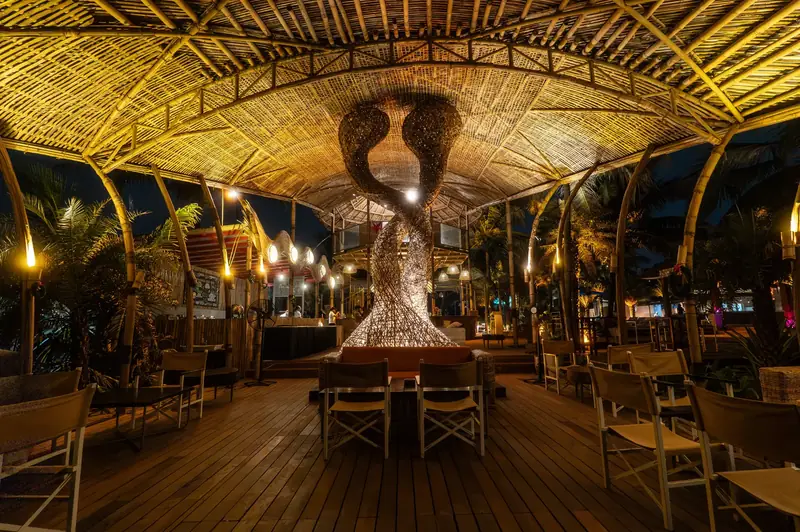
 Restaurant
Mediterranean and Middle Eastern plates in a bamboo pavilion by the sea, 11 AM–11 PM.
The most beautiful beaches in Goa are Vagator for red cliffs under Chapora Fort, Palolem and Agonda for palm-lined South Goa bays, Querim for a quiet river mouth at Goa's northern tip, and Morjim for a wide estuary sunset. Which one is best for you depends on the landscape you want and when you can get there.
By Anurag Kamboj · Updated
Restaurant
Mediterranean and Middle Eastern plates in a bamboo pavilion by the sea, 11 AM–11 PM.

 Beach Club
Sunbeds, private cabanas, pool and house music, 11 AM–10 PM daily.
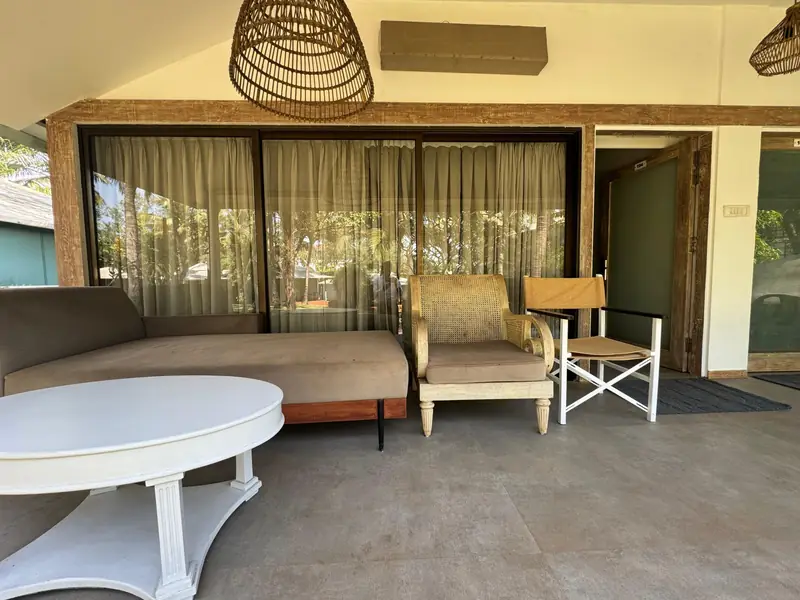 Luxury Cottage
There is no single winner, because Goa's beaches are beautiful in different ways. Every beach faces west, so almost all of them give you a sunset over the Arabian Sea. What separates the memorable ones is the setting (cliffs, a headland, a river mouth, a curve of palms) and whether that view survives the peak-season crowds.
| Traveller | Our pick | Why |
|---|---|---|
| Photographers | Vagator, seen from Chapora Fort | Red laterite cliffs, rocks and the estuary below |
| Couples | Agonda | Palolem's palm-backed look at a slower pace |
| Families | Morjim or Ashwem | Wide sand and shallow water near the shore |
| Crowd-avoiders | Querim (Keri) | Goa's northernmost beach, at the Tiracol river |
| First-time visitors | Palolem | The crescent bay from the postcards |
| Wildlife lovers | Morjim or Galgibaga | Both are Olive Ridley turtle nesting beaches |
North Goa's most scenic beaches sit at the ends of its coast, around river mouths and headlands, rather than in the busy middle belt.
Querim, also spelt Keri, is Goa's northernmost beach, running up to the Tiracol river. It is far less developed than the beaches to its south, and you drive up for the view and the quiet rather than for facilities.
Walk north along Arambol past the black rocks and you reach a freshwater lake just behind the beach, backed by wooded slopes. Goa Tourism (GTDC) calls it a sweet-water pool. The central stretch is busy in season. The walk is the reward.
Morjim is about space rather than drama. It sits on the northern bank of the Chapora river estuary, so from its southern end you look across the water to Chapora Fort and Vagator's cliffs. The sand is long and flat, and from late December to March the Goa Forest Department protects Olive Ridley nests here. According to The Goan, 152 turtles laid more than 15,500 eggs at Morjim in the 2024–25 season.
Vagator is North Goa's most dramatic beach: red laterite cliffs, black rocks and a ruined fort on the headland. Chapora Fort, rebuilt by the Portuguese in 1717 according to GTDC, is also the one many Indian visitors know from the film Dil Chahta Hai. Climb to the ramparts in the late afternoon for the view down the coast and across the river to Morjim.
South Goa's beaches look softer, with palm-lined bays, longer sands and fewer buildings on the shoreline.
Goa's beaches look their best in the first two hours of daylight and the last hour before sunset, and November to February gives the clearest skies. According to timeanddate, Panaji's sunset comes at about 6:01 PM from mid-November to early December and 7:09 PM at its latest in July, so check the time on the day and arrive half an hour ahead. The monsoon, roughly June to September, turns the hills behind the beaches deep green and empties the sand, but red flags close the sea to swimmers, many shacks shut and the light is often grey. During the mechanised-fishing ban, from 1 June to 31 July, there are fewer trawlers on the horizon. March to May brings hotter days and quieter beaches. For beauty, crowds matter as much as weather: a crescent bay behind rows of sunbeds in late December looks nothing like its photograph. Our list of less crowded beaches in Goa helps with that.
The best way to see Morjim's view is at sunset, looking across the Chapora estuary to the fort on the far headland. It helps to have somewhere to sit. At Marbela Beach Resort, the sea views are from Meso, the handcrafted bamboo restaurant (11 AM–11 PM), the VIP Terrace, which seats 60, the AC Deck Lounge and the beach club (11 AM–10 PM). The rooms are mostly garden-facing, a short walk from the sand, so ask reservations on +91 91588 81185 which rooms have sea views before you book. For a sunset table, use the Meso table booking page or call +91 91588 81184.
Palolem and Agonda are a long day out from Morjim. To choose a base, read North Goa vs South Goa; to plan the fort climb, see Chapora Fort from Morjim.
Vagator, for most people, because of its red cliffs and Chapora Fort on the headland. For a quieter view, Querim at the Tiracol river and Morjim facing the fort across the estuary are strong alternatives.
They are softer and less built-up, with palm-lined bays like Palolem and Agonda. North Goa has more dramatic settings, such as cliffs and river mouths, so it depends on the look you want.
No. Swim only between the Drishti lifeguards' red-and-yellow flags, and not at all during the monsoon, when red flags go up. Rocky beaches like Vagator need extra care.
Chapora Fort, on the headland above Vagator Beach in North Goa. It is about 13–15 km by road from Morjim, via the bridge at Siolim.
Yes, if you want quiet more than facilities. Querim, or Keri, is Goa's northernmost beach at the Tiracol river, and it is far less developed than the beaches further south.
About the author
Anurag Kamboj is a Goa explorer and travel writer who puts together Marbela Beach Resort's guides to Morjim and North Goa, from airport routes and beach-safety rules to turtle season and where to sit for sunset.
How these guides are researched →