

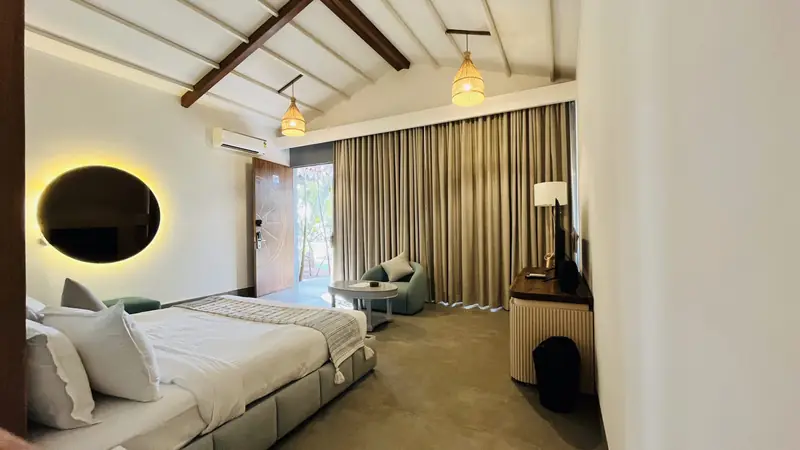
 Spa Villa
Is Goa good in July and August? Yes for a quiet, green, rainy break; no for a beach holiday. Both months sit in the middle of the monsoon, so red flags close the sea, most shacks are gone and water sports stop. In return you get empty roads, full rivers and lower resort rates.
By Anurag Kamboj · Updated
Spa Villa
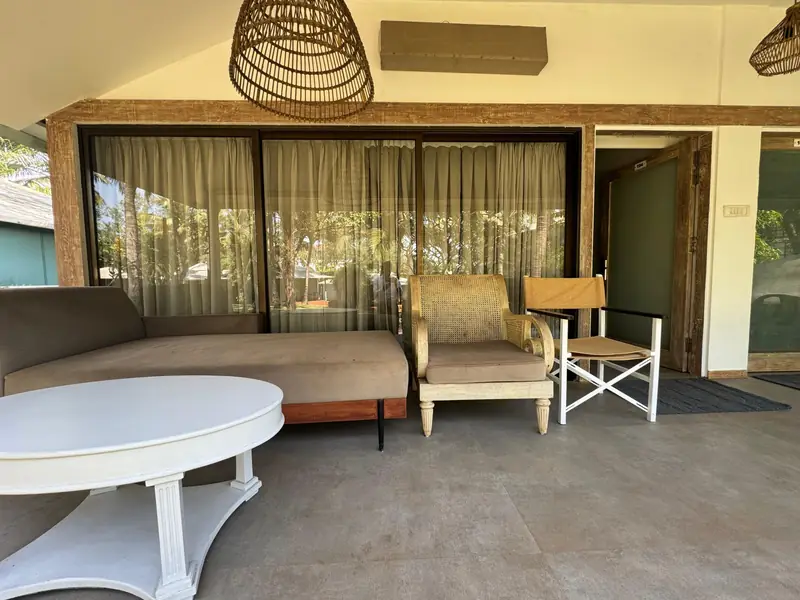 Luxury Cottage
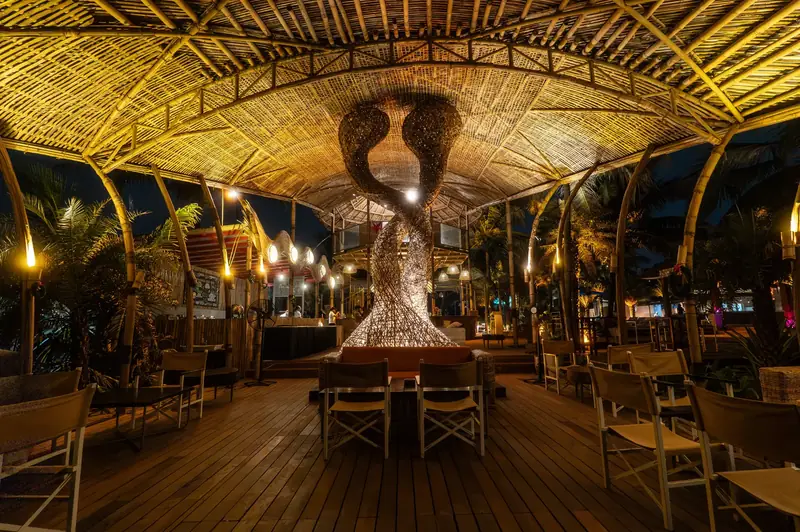 Restaurant
Mediterranean and Middle Eastern plates in a bamboo pavilion by the sea, 11 AM–11 PM.
Goa in July and August is wet, green and quiet, with the sea closed for swimming. The monsoon runs roughly from June to September, and these two months are its core. Expect long spells of heavy rain, broken by an hour or an afternoon of clear sky. The sea turns grey-brown and rough. Drishti lifeguards keep red flags up and swimming is not allowed, even when the edge of the water looks calm.
The coast changes shape too. Most beach shacks are seasonal structures, taken down before the rains and rebuilt after, so the sand on Morjim, Ashwem and Vagator is bare. The mechanised-fishing ban, roughly June to July, keeps trawlers in harbour for part of the season. The Anjuna Flea Market does not run, water sports stop until around October, and turtle nesting at Morjim will not start until roughly November. What remains is a different Goa: flooded paddy fields, dripping palms, rivers running full and roads without peak-season traffic.
The trade-offs are sharp, so weigh each row against what you actually want from the trip.
| The upside | The downside |
|---|---|
| The countryside is at its greenest | Rain can wipe out outdoor plans for a day or more |
| Resort rates are lower than in November–February | No sea swimming; red flags on every beach |
| Quiet beaches, villages and roads | Most shacks and many seasonal cafes are shut |
| Dramatic seas to watch from under a roof | No water sports, no Anjuna market |
| Easy to get a table at restaurants that stay open | Damp clothes, mosquitoes, slippery scooter roads |
Go in July or August if you want rest more than activity. Couples on a short break, people who like rain, readers, and anyone who enjoys a long lunch while the weather rolls in off the Arabian Sea will find a lot to like. Monsoon trips also suit people who already know Goa in season and want to see the other side of it. Three or four nights is usually the right length; a week of rain tests most people's patience.
Wait for another month if this is your first visit, if the family is expecting days in the sea, or if the trip is built around beach parties, water sports or markets. You will be disappointed, and it will not be the weather's fault. For sunshine and swimming, look at November to February, when Goa is dry and busiest, or March to May, when it is hotter and quieter. October is the changeover: read Goa in October for how the season restarts, or compare every month in our guide to the best month to visit Goa.
Plenty works in the rain, as long as it has a roof or you go by taxi.
More indoor and inland ideas are in things to do in North Goa besides beaches.
The best off-season trips are the flexible ones, planned a day at a time. Before booking, ask your resort exactly which restaurants, bars and facilities operate on your dates, because monsoon hours are not the same everywhere. Respect the red flags completely, including at the shoreline. Use taxis or app cabs such as GoaMiles instead of a scooter on wet, potholed roads. Pack quick-dry clothes, sandals with grip, a light rain jacket, a dry bag for your phone and mosquito repellent. Sunsets fall late in the early monsoon, around 7 PM, but cloud usually hides them, so don't build an evening around one. Save 112, India's emergency number, in your phone.
At Marbela Beach Resort, the gardens around the cottages and villa rooms are at their greenest in July and August, and the sea views from Meso's bamboo pavilion and the AC Deck Lounge make a wet afternoon worth having. Call reservations on +91 91588 81185 or +91 91588 81183, or message on WhatsApp, to confirm which dining areas, the beach club and the spa are open on your dates. Monsoon rates are live on the Marbela booking engine. Bookings are non-refundable, so read the cancellation policy before you pay.
No. Lifeguards keep red flags up through the monsoon and swimming in the sea is not allowed, because of rough water and strong currents.
Generally, yes. The monsoon is the off-season and resort rates are usually lower than in the November to February peak, so check live rates for your dates.
Mostly not. Seasonal shacks are dismantled before the rains and rebuilt from around October, though many restaurants and resort dining rooms stay open.
Not every day. July brings long spells of heavy rain, but there are breaks of a few hours, so keep plans loose and decide each morning.
It can be, for couples who want quiet, green scenery and slow days indoors. Couples who want sunshine and swimming should choose November to March.
About the author
Anurag Kamboj is a Goa explorer and travel writer who puts together Marbela Beach Resort's guides to Morjim and North Goa, from airport routes and beach-safety rules to turtle season and where to sit for sunset.
How these guides are researched →